
Introduction
The human brain is one of the most powerful and mysterious organs in the body. It controls everything you do—from thinking and breathing to dreaming and decision-making. Yet, despite learning basic biology in school, many fascinating facts about the brain are often left unexplored.
Did you know your brain can rewire itself? Or that it uses a huge amount of energy even when you’re resting? These are just a few examples of how incredible this organ really is.
In this article, we’ll explore 10 mind-blowing facts about the human brain that will change the way you think about yourself. These facts are simple to understand, backed by science, and packed with insights you can apply in daily life.
1. Your Brain Uses a Huge Amount of Energy
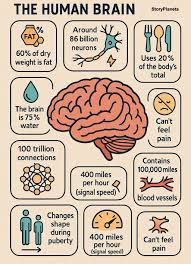
Even though the brain makes up only about 2% of your body weight, it uses around 20% of your total energy.
Why This Matters:
- Thinking, focusing, and problem-solving all require energy
- Your brain is active even when you’re sleeping
- Lack of proper nutrition can affect brain performance
Real-Life Example:
Have you ever felt tired after studying or concentrating for a long time? That’s because your brain is working hard and using a lot of energy.
2. The Brain Can Rewire Itself (Neuroplasticity)
One of the most amazing facts about the human brain is its ability to change and adapt. This is called neuroplasticity.
What It Means:
- The brain forms new connections when you learn something new
- It can recover from injuries over time
- Habits can reshape how your brain works
Example:
When you practice a skill like playing an instrument or learning a language, your brain literally changes to make you better at it.
3. Multitasking Actually Reduces Brain Efficiency
Many people believe multitasking makes them more productive. In reality, the brain can’t fully focus on multiple tasks at once.
What Happens Instead:
- The brain switches quickly between tasks
- This reduces accuracy and speed
- It increases mental fatigue
Tip:
Focus on one task at a time for better results and less stress.
4. Your Brain Generates Enough Electricity to Power a Small Light
The human brain produces electrical signals that help neurons communicate.
Interesting Insight:
- These signals are strong enough to power a small light bulb
- Electrical activity increases when you think or feel emotions
Why It’s Cool:
Your thoughts are not just ideas—they are actual electrical patterns happening inside your brain.
5. Memory Is Not Perfect — It Changes Over Time
Many people think memories are like recordings, but they are not. Every time you recall something, your brain can change it slightly.
What This Means:
- Memories can become less accurate over time
- Emotions can influence what you remember
- Two people can remember the same event differently
Example:
You might remember a childhood event differently than your siblings because your brain reshapes the memory.
6. Your Brain Is More Active at Night Than You Think
Even when you’re asleep, your brain stays active.
During Sleep:
- It processes information from the day
- Strengthens memories
- Clears out waste and toxins
Why Sleep Is Important:
Poor sleep can affect memory, mood, and concentration because your brain doesn’t get enough time to “reset.”
7. The Brain Can Predict Things Before You’re Aware
Studies show that your brain often makes decisions before you consciously realize it.
How It Works:
- The brain processes information quickly
- It uses past experiences to predict outcomes
- You become aware of the decision slightly later
Real-Life Example:
When you catch a ball without thinking, your brain has already predicted where it will go.
8. Stress Can Physically Change Your Brain
Stress is not just a feeling—it can actually affect your brain structure over time.
Effects of Long-Term Stress:
- Reduces memory and learning ability
- Affects emotional control
- Can shrink certain brain areas
Simple Ways to Reduce Stress:
- Exercise regularly
- Get enough sleep
- Practice relaxation techniques
9. Your Brain Loves Patterns and Shortcuts
The brain is designed to save energy, so it often looks for patterns and shortcuts.
What This Leads To:
- Faster decision-making
- Sometimes incorrect assumptions
- Habits forming quickly
Example:
You might assume something based on past experience, even if the situation is slightly different.
10. Learning New Things Keeps Your Brain Healthy
Just like muscles, your brain gets stronger when you use it.
Benefits of Continuous Learning:
- Improves memory
- Slows down aging effects
- Boosts creativity and problem-solving
Easy Ways to Keep Learning:
- Read books or articles
- Try a new hobby
- Learn a new skill or language
Conclusion
The human brain is truly one of the most fascinating parts of the body. From its ability to rewire itself to its constant activity—even during sleep—it plays a powerful role in shaping who we are.
Understanding these mind-blowing brain facts can help you:
- Improve your focus and productivity
- Take better care of your mental health
- Build smarter habits for learning and growth
The more you learn about your brain, the better you can use its full potential. And the best part? Your brain is always ready to learn something new.
FAQ Section
1. What is the most powerful part of the brain?
The brain works as a whole system, but areas like the frontal lobe are important for decision-making, planning, and personality.
2. Can the brain really change over time?
Yes, thanks to neuroplasticity, the brain can form new connections and adapt based on learning and experience.
3. Why is sleep important for the brain?
Sleep helps the brain process information, store memories, and remove waste, which improves overall brain function.
4. Does stress damage the brain permanently?
Long-term stress can have negative effects, but healthy habits like exercise and relaxation can help the brain recover.
5. How can I improve my brain health?
You can improve brain health by eating well, sleeping enough, staying active, and continuously learning new thing