
Introduction
Space is vast, mysterious, and full of surprises. Even though scientists have studied it for decades, the universe still holds secrets that challenge our understanding. From invisible forces to strange objects floating in darkness, space is not as simple as it seems.
In this article, we’ll explore 12 strange but true facts about space that scientists have discovered. These facts are not myths—they are based on real research and observations. Some may sound unbelievable, but they reveal how incredible and complex the universe really is.
Let’s dive into the unknown and uncover these fascinating truths.
1. Space Is Completely Silent
Unlike Earth, space has no air or atmosphere. Sound needs a medium like air or water to travel. Since space is a vacuum, no sound can move through it.
What This Means:
- Explosions in space are silent
- You cannot hear anything without special equipment
- Astronauts communicate using radios
This silence makes space both peaceful and eerie.
2. There Are More Stars Than Grains of Sand on Earth
Scientists estimate that there are more stars in the universe than grains of sand on all the beaches on Earth.
Why This Is Amazing:
- Our galaxy alone has billions of stars
- There are billions of galaxies
- The total number is almost impossible to count
This shows how incredibly large the universe is.
3. A Day on Venus Is Longer Than a Year
On Venus, time works very differently.
- One full rotation (a day) takes about 243 Earth days
- One orbit around the Sun (a year) takes 225 Earth days
Result:
A day on Venus is longer than its year!
This strange timing is due to Venus spinning very slowly on its axis.
4. Neutron Stars Are Extremely Dense
Neutron stars are the remains of exploded stars. They are incredibly small but very heavy.
Mind-Blowing Fact:
A single teaspoon of neutron star material would weigh billions of tons on Earth.
Why It Happens:
- Gravity compresses matter tightly
- Atoms are crushed together
This makes neutron stars one of the densest objects in space.
5. There Is a Giant Cloud of Alcohol in Space
Yes, you read that right! Scientists have found a massive cloud of alcohol in space.
Details:
- It is located near the center of our galaxy
- Contains chemicals similar to alcohol on Earth
- It is huge—spanning thousands of light-years
Of course, it’s not drinkable, but it’s still fascinating!
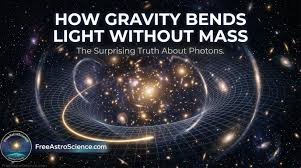
6. Black Holes Can Slow Down Time
Black holes are known for their strong gravity, but they also affect time.
Strange Effect:
- Time moves slower near a black hole
- The closer you get, the slower time becomes
This is due to a concept called gravitational time dilation.
Real-World Idea:
If you stayed near a black hole and returned to Earth, you might age slower than others.
7. Space Is Not Completely Empty
Even though space looks empty, it actually contains tiny particles.
What Exists in Space:
- Dust particles
- Gas clouds
- Radiation
These elements can form stars, planets, and galaxies over time.
8. Jupiter Has the Shortest Day of Any Planet
Jupiter spins very fast.
- One full rotation takes just about 10 hours
What This Causes:
- Strong winds and storms
- A bulging shape at the center
Despite being the largest planet, it has the shortest day!
9. There Is a Planet Made of Diamond (Possibly)
Scientists believe there is a planet that may be mostly made of diamond.
Why Scientists Think This:
- The planet has high carbon content
- Extreme pressure could turn carbon into diamond
This planet is often called a “diamond planet,” though more research is needed.
10. Astronauts Grow Taller in Space
When astronauts go into space, their height can increase.
Reason:
- No gravity compressing the spine
- Spine stretches slightly
Result:
Astronauts can grow up to 2 inches taller in space!
However, they return to normal height after coming back to Earth.
11. The Sun Makes Up Almost All the Mass in the Solar System
The Sun is incredibly massive.
Fact:
- It contains about 99.8% of the total mass of the solar system
Meaning:
- All planets, moons, and asteroids share the remaining 0.2%
This shows how powerful and important the Sun is.
12. There Could Be More Planets Than Stars
It might sound strange, but scientists believe there could be more planets than stars.
Why:
- Many stars have multiple planets
- New planets are being discovered regularly
These planets are called exoplanets, and some may even support life.
Conclusion
Space is full of wonders that challenge what we think we know. From silent explosions to time-bending black holes, these strange but true space facts remind us how little we truly understand about the universe.
Scientists continue to explore and discover new things every day. Each discovery helps us learn more about where we come from and what lies beyond our planet.
The universe is not just big—it’s full of surprises. And who knows? The next strange fact might be even more unbelievable than the ones we’ve shared today
FAQs
1. Why is space silent?
Space has no air, so sound cannot travel. That’s why it is completely silent.
2. Can humans survive near a black hole?
No, the strong gravity would be extremely dangerous and could pull objects apart.
3. What is the strangest thing in space?
Black holes are often considered the strangest due to their ability to bend time and space.
4. Are there planets like Earth in space?
Yes, scientists have discovered Earth-like planets, but none are confirmed to support life yet.
5. How do scientists study space?
They use telescopes, satellites, and space missions to observe and collect data.